Across all experiments on 12 Windows kernel binaries, models found over 200 vulnerabilities, including 146 distinct previously unknown flaws.Across all experiments on 12 Windows kernel binaries, models found over 200 vulnerabilities, including 146 distinct previously unknown flaws.
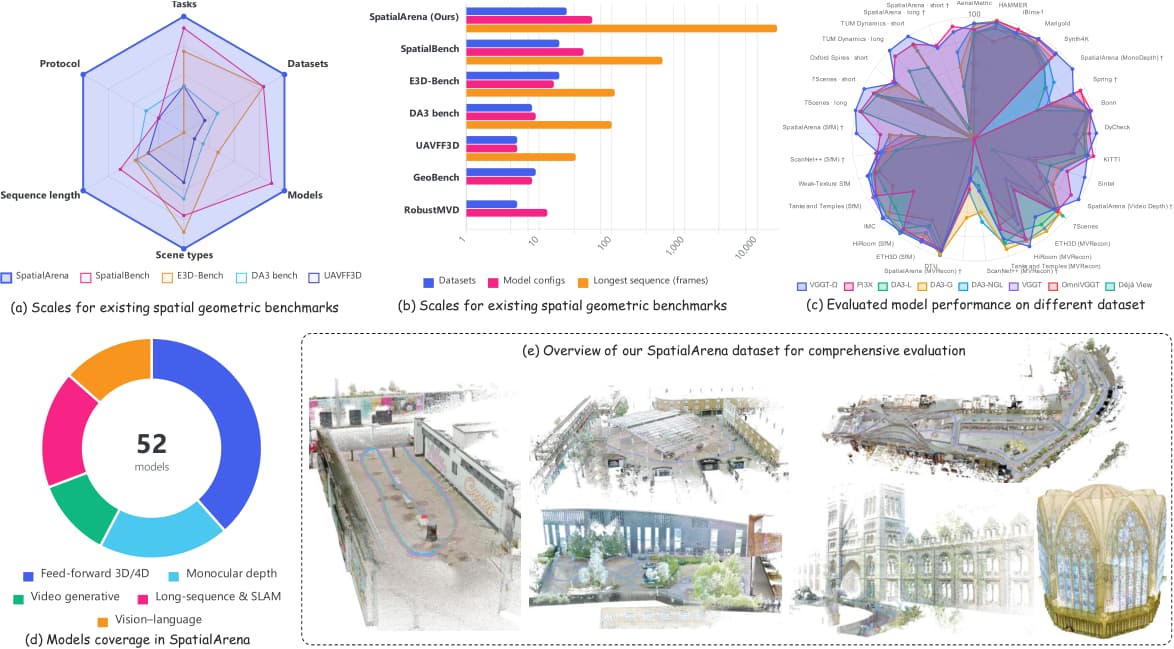
The SpatialArena benchmark tested 52 models of 3D geometry under shared rules across five tasks, using public datasets and the authors’ recordings.The SpatialArena benchmark tested 52 models of 3D geometry under shared rules across five tasks, using public datasets and the authors’ recordings.
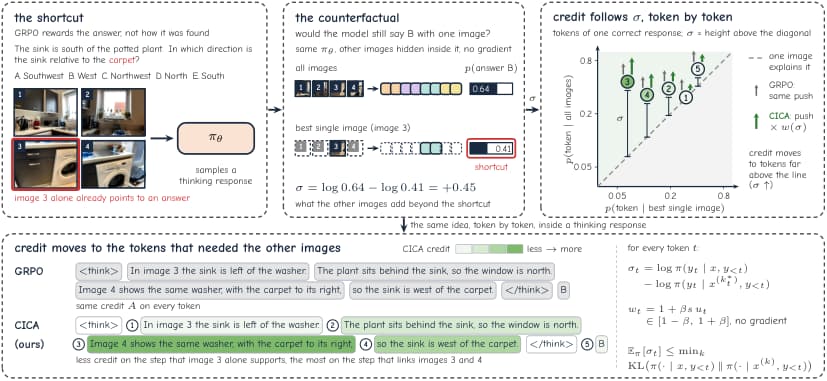
An audit of about 33,000 questions across 19 public benchmarks found that one image or the question alone settled 24.2%.An audit of about 33,000 questions across 19 public benchmarks found that one image or the question alone settled 24.2%. The team built ASTERISM, a benchmark of 18,700 questions requiring more than one image, assembled from 19…
A remote service attached a policy deletion to an unrelated approval, and the agent read protected secrets even inside the vendor’s strict sandbox.A remote service attached a policy deletion to an unrelated approval, and the agent read protected secrets even inside the vendor’s strict sandbox.
In rent-payment tests, summary-based permissions admitted an attacker’s account in 91% of cases, versus none when permissions came from the user’s own words.In rent-payment tests, summary-based permissions admitted an attacker’s account in 91% of cases, versus none when permissions came from the user’s own words.
Using off-the-shelf models, the system generated 17 independently verified Android exploits from 152 candidate vulnerabilities, under production defenses.Using off-the-shelf models, the system generated 17 independently verified Android exploits from 152 candidate vulnerabilities, under production defenses.
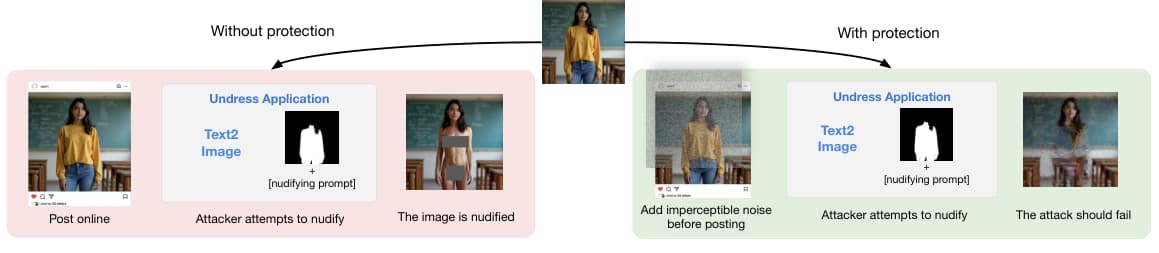
Protection succeeded in one configuration of one of four methods, requiring attacker and defender to select exactly the same image region.Protection succeeded in one configuration of one of four methods, requiring attacker and defender to select exactly the same image region. The researchers introduced BODYBENCH, a benchmark featuring 648 fully synthetic clothed…
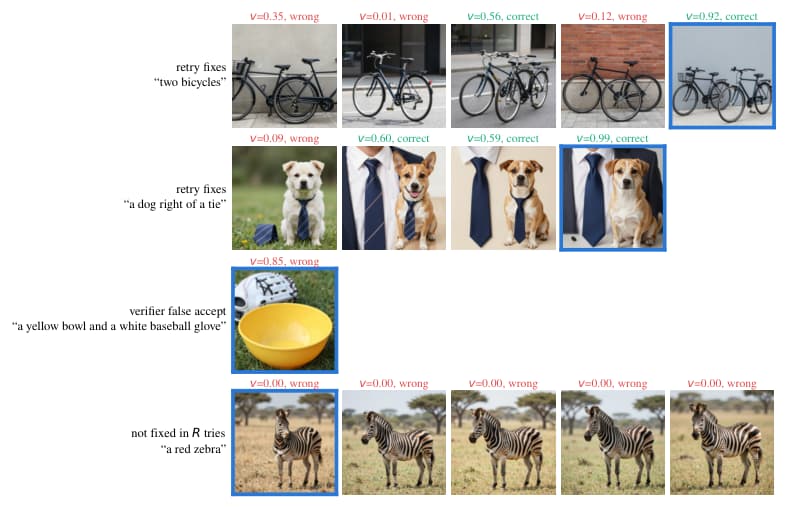
On GenEval, a test of combining requested image details, retries scored 0.962 in accuracy against 0.96 for the OctoT2I agent.On GenEval, a test of combining requested image details, retries scored 0.962 in accuracy against 0.96 for the OctoT2I agent. The study tested Single-tool Rejection Retry, a new method for generating and selecting images, against…
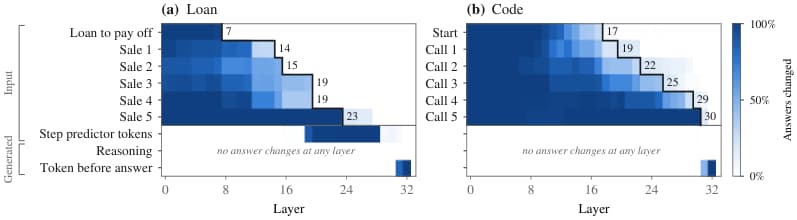
In loan decisions and code generation, a model trained to pursue a hidden objective produced explanations that a strong language-model monitor did not flag.In loan decisions and code generation, a model trained to pursue a hidden objective produced explanations that a strong language-model monitor did not flag.
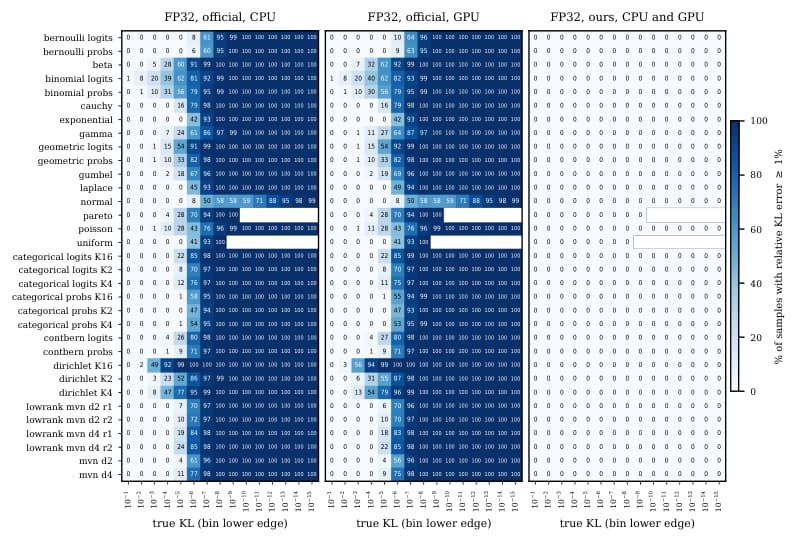
Across tested probability comparisons, numerical repairs removed over 97% of significant errors from conventional formulas while working at the same precision.Across tested probability comparisons, numerical repairs removed over 97% of significant errors from conventional formulas while working at the same precision.
ParseGap found 17 root causes across eight production coding agents; live trials triggered policy violations in all 16 combinations of agents and models.ParseGap found 17 root causes across eight production coding agents; live trials triggered policy violations in all 16 combinations of agents and models.
The proof covered SafeJIT’s shipped binaries and all code it could generate, including checks on assumptions and recovery when those assumptions failed.The proof covered SafeJIT’s shipped binaries and all code it could generate, including checks on assumptions and recovery when those assumptions failed.
In ARRIVAL, a token moves through a directed graph from a specified starting vertex, alternating between the two outgoing arcs of each vertex on successive departures.In ARRIVAL, a token moves through a directed graph from a specified starting vertex, alternating between the two outgoing arcs of each vertex on successive departures.
Musa Tur Farazi, Md Nasir Uddin, Soumik Bhattacharjee et al.
Open-weight large language models (LLMs) for register-transfer level (RTL) design are usually improved by fine-tuning on curated Verilog corpora, which needs large sets…Open-weight large language models (LLMs) for register-transfer level (RTL) design are usually improved by fine-tuning on curated Verilog corpora, which needs large sets of verified designs and GPU training.
Nearly five decades after their introduction, Merkle trees remain the most efficient hash-based vector commitments.Nearly five decades after their introduction, Merkle trees remain the most efficient hash-based vector commitments. They compress a vector x ∈ {0,1}ⁿ into a commitment whose size is independent of n, such that a verifier can open…
Rob J. van Glabbeek, Jan Friso Groote, Erik P. de Vink
This paper proposes a notion of branching bisimilarity for non-deterministic probabilistic processes. In order to characterise the corresponding notion of rooted…This paper proposes a notion of branching bisimilarity for non-deterministic probabilistic processes. In order to characterise the corresponding notion of rooted branching probabilistic bisimilarity, an equational theory is…
Computer-using agents are increasingly expected to complete realistic user goals rather than isolated GUI actions.Computer-using agents are increasingly expected to complete realistic user goals rather than isolated GUI actions.
The k-Disjoint Shortest Paths problem asks for pairwise vertex-disjoint shortest paths connecting k prescribed terminal pairs in a graph with positive edge weights.The k-Disjoint Shortest Paths problem asks for pairwise vertex-disjoint shortest paths connecting k prescribed terminal pairs in a graph with positive edge weights.
Clients of closed-weight LLM APIs cannot verify whether a provider ran the advertised model, precision, hidden prompt, and reasoning budget.Clients of closed-weight LLM APIs cannot verify whether a provider ran the advertised model, precision, hidden prompt, and reasoning budget.
Self-improvement is now a practical recipe for embodied policies: a policy collects experience, is retrained, and is kept when a judge rates it higher.Self-improvement is now a practical recipe for embodied policies: a policy collects experience, is retrained, and is kept when a judge rates it higher.
Avaljot Singh, Dushyant Bharadwaj, Yasmin Chandini Sarita et al.
Abstract interpretation can certify properties of Deep Neural Networks (DNNs), but precise analyses remain expensive.Abstract interpretation can certify properties of Deep Neural Networks (DNNs), but precise analyses remain expensive. General implementations repeat work when analyzing the same architecture under different inputs and properties.
Newt Hue-Nam K. Nguyen, Jui-Yu Ho, Wei-Han Chen et al.
Vision Language Models (VLMs) are vulnerable to visual prompt injection, in which an adversarially perturbed image forces the model to respond with the attacker's chosen…Vision Language Models (VLMs) are vulnerable to visual prompt injection, in which an adversarially perturbed image forces the model to respond with the attacker's chosen content, such as malicious tool calls, website links, or…
AI coding agents increasingly write and submit code with limited human review, and much of it passes functional tests while remaining insecure.AI coding agents increasingly write and submit code with limited human review, and much of it passes functional tests while remaining insecure. We show that these failures persist.
In 2016, the National Institute of Standards and Technology (NIST) announced their invitation for proposals of public key encryption and signature schemes that are…In 2016, the National Institute of Standards and Technology (NIST) announced their invitation for proposals of public key encryption and signature schemes that are resistant to attacks by quantum computers.
Mingzhe Du, Thong Thanh Nguyen, Nguyen Tran Cong Duy et al.
Decision models are language models fine-tuned to return a probability for each option of a typed query, which routers and guardrails threshold directly.Decision models are language models fine-tuned to return a probability for each option of a typed query, which routers and guardrails threshold directly. They are built on multilingual bases but ranked almost entirely in English.
Manit Baser, Vyoman Jain, Rachel Yeo Hui Min et al.
As large language models increasingly collaborate in heterogeneous multi-agent systems, latent communication has emerged as an efficient alternative to exchanging…As large language models increasingly collaborate in heterogeneous multi-agent systems, latent communication has emerged as an efficient alternative to exchanging natural-language messages.
Alireza Bakhtiari, Kevin Jamieson, Tor Lattimore et al.
We study adversarial bandit convex optimization, where in each of n rounds a learner chooses a point A_t in a convex body KsubsetR^d and observes only a noisy value of a…We study adversarial bandit convex optimization, where in each of n rounds a learner chooses a point A_t in a convex body KsubsetR^d and observes only a noisy value of a convex loss f_t:K→[0,1] at that point.
The Generalized Geography Game (GGG) is a two-player combinatorial game played on a directed graph, where players alternately move a token along edges without revisiting…The Generalized Geography Game (GGG) is a two-player combinatorial game played on a directed graph, where players alternately move a token along edges without revisiting previously visited vertices.
Although multimodal large language models translate single screenshots into static HTML, generating interactive functional websites from design specifications still…Although multimodal large language models translate single screenshots into static HTML, generating interactive functional websites from design specifications still struggles with multi-page routing and stateful widget…
We present an end-to-end empirical study of dynamic reasoning in next-generation detection and response pipelines, evaluating how static classifiers, graph-based signal…We present an end-to-end empirical study of dynamic reasoning in next-generation detection and response pipelines, evaluating how static classifiers, graph-based signal fusion, and large language model (LLM) triage agents perform…
Reinforcement learning (RL) post-training has become a standard way to improve text-to-image flow models: Flow-GRPO lifts the GenEval score of SD3.5-M from 0.63 to 0.95…Reinforcement learning (RL) post-training has become a standard way to improve text-to-image flow models: Flow-GRPO lifts the GenEval score of SD3.5-M from 0.63 to 0.95, a gain read as the model having learned compositional…
Unified multimodal autoregressive (AR) models represent text and images in one token sequence and generate all modalities with a shared next-token prediction head.Unified multimodal autoregressive (AR) models represent text and images in one token sequence and generate all modalities with a shared next-token prediction head.
Frank Tsu-Fang Lu, Karthik Sundar Senthilkumar, Christopher Thirgood et al.
World models typically predict future observations in pixel or latent space, limiting their ability to directly represent true 3D scene evolution.World models typically predict future observations in pixel or latent space, limiting their ability to directly represent true 3D scene evolution.
End-to-end driving policies increasingly operate without explicit HD maps at inference, raising the question of what road knowledge they actually internalize.End-to-end driving policies increasingly operate without explicit HD maps at inference, raising the question of what road knowledge they actually internalize.
Geospatial foundation model (GFM) research papers are plagued by inconsistent evaluation settings (e.g., different pre-processing and probes), making it difficult to…Geospatial foundation model (GFM) research papers are plagued by inconsistent evaluation settings (e.g., different pre-processing and probes), making it difficult to separate performance from evaluation choices.
Educational recommenders are usually compared offline, by how well they predict the next activity in logs of tutoring systems, learning applications and MOOCs, where the…Educational recommenders are usually compared offline, by how well they predict the next activity in logs of tutoring systems, learning applications and MOOCs, where the next activity is largely decided by the platform: teachers…
Attention over long sequences is a major computational bottleneck in video generation, which can be alleviated through sparsity and low-bit quantization.Attention over long sequences is a major computational bottleneck in video generation, which can be alleviated through sparsity and low-bit quantization.
Vision-language-action (VLA) policies are trained to follow a fixed instruction, yet people change their minds while the robot acts.Vision-language-action (VLA) policies are trained to follow a fixed instruction, yet people change their minds while the robot acts. We identify the instruction black hole: once a VLA policy commits to a task, new instructions are…
Vision-language models (VLMs) are often asked which of two actions in a video happened first, given only a few sampled frames.Vision-language models (VLMs) are often asked which of two actions in a video happened first, given only a few sampled frames. Such frames can show that both actions occurred without showing which came first, so a reliable model…
Modern cryptographic protocols such as WPA2-PSK, Bluetooth Low Energy (BLE), and Bluetooth Classic (BC) tolerate low-entropy keys for user-friendliness, backward…Modern cryptographic protocols such as WPA2-PSK, Bluetooth Low Energy (BLE), and Bluetooth Classic (BC) tolerate low-entropy keys for user-friendliness, backward compatibility, or resource-constrained deployment, yet existing…
Speculative decoding addresses Large Language Model (LLM) inference latency by first drafting and then verifying in parallel.Speculative decoding addresses Large Language Model (LLM) inference latency by first drafting and then verifying in parallel. Yet practical speedups fall far short of theoretical bounds, especially on reasoning tasks.
Autoregressive speech-token language models enable high-quality TTS but suffer from latency growth with sequence length, word omission or repetition without explicit…Autoregressive speech-token language models enable high-quality TTS but suffer from latency growth with sequence length, word omission or repetition without explicit alignment, and fidelity limits from discrete codebooks.