Other areas

Friday, October 1613 papers

arXiv

Pixels to Tokens: Token Space Efficient Active Learning for Low-Budget Semantic Segmentation

Utku Cicek, Mahip Singh, Ziyao Shang et al.

While foundation models and vision transformers (ViTs) have redefined visual representations, current active learning (AL) strategies for these backbones largely operate…While foundation models and vision transformers (ViTs) have redefined visual representations, current active learning (AL) strategies for these backbones largely operate at the patch or region level, where annotation requirements…

Preprint: method
arXiv

Long-Context Drafting Does Not Require Long-Context Drafters

Aref Jafari, Vansh Bhatia, Matt Qin et al.

Speculative decoding pairs a cheap drafter with parallel verification against the target. At ultra-long context it stops paying, because a drafter that attends over the…Speculative decoding pairs a cheap drafter with parallel verification against the target. At ultra-long context it stops paying, because a drafter that attends over the full prefix inherits the target's context-dependent cost, so…

Preprint: method
arXiv

Evolving Together, Failing Apart: The Skill-Policy Co-evolution Trap in Self-Improving Agents

Yujie Feng, Xiaobin Wang, Jinluan Yang et al.

Skill-policy co-evolution, in which an agent's policy model and its skill bank improve each other during training, is a promising paradigm for self-improving agents.Skill-policy co-evolution, in which an agent's policy model and its skill bank improve each other during training, is a promising paradigm for self-improving agents.

Preprint: benchmark or dataset
arXiv

A Self-Improving Agent that Grows its Own DSL: Oracle-Free Operator Induction for Exact Question Answering

Yun-Shiuan Chuang, Yirou Ge, Yixi Li et al.

A self-improving agent has to decide which new skills to keep, and in practice it keeps whatever earns a high reward, convinces a judge model, or compresses its library…A self-improving agent has to decide which new skills to keep, and in practice it keeps whatever earns a high reward, convinces a judge model, or compresses its library, even when the skill is wrong.

Preprint: method
arXiv

INFUSE: A Unified Surface Benchmark for Indirect Prompt Injection in Agentic Systems

Thuy Dung Nguyen, Jingyi Guo, Rana Seda Dubauskas et al.

LLM-based agents increasingly execute long-horizon, end-to-end workflows involving shell commands, code modification, dependency installation, and interaction with remote…LLM-based agents increasingly execute long-horizon, end-to-end workflows involving shell commands, code modification, dependency installation, and interaction with remote services.

Preprint: benchmark or dataset
arXiv

Open Benchmark of AI Impact on Humans (ImpactBench): an expert-guided, open platform for the holistic evaluation of AI impact on humans

Chayapatr Archiwaranguprok, Krystal Kirkland, Rachel Poonsiriwong et al.

The present work is concerned with how to measure, at scale, the multi-dimensional impact of generative AI models on the individuals who use them.The present work is concerned with how to measure, at scale, the multi-dimensional impact of generative AI models on the individuals who use them.

Preprint: benchmark or dataset
arXiv

On-Policy Residual Learning for Diffusion Language Models

Yifan Yu, Yuqing Jian, Jisen Li et al.

Residual context is key to unlocking the speed-quality Pareto frontier of diffusion language models (DLMs) by carrying forward predictive distributions across denoising…Residual context is key to unlocking the speed-quality Pareto frontier of diffusion language models (DLMs) by carrying forward predictive distributions across denoising steps.

Preprint: method
arXiv

HPCAgent-Bench: A Framework for Sound Benchmarking of Code-Optimizing Agents, Harnesses, and Skills

Yakup Koray Budanaz, Lorenzo Paleari, Marcin Copik et al.

Coding agents are increasingly used to optimize code, but existing benchmarks fix one accelerator, programming model or harness, so they cannot isolate what each…Coding agents are increasingly used to optimize code, but existing benchmarks fix one accelerator, programming model or harness, so they cannot isolate what each component contributes or show whether added skills and tools repay…

Preprint: benchmark or dataset
arXiv

Unmasking the Secret Code: Using Canaries to Show How Masked Context Controls Memorization in SFT

Avi Schwarzschild, Om Thakkar, Sahra Ghalebikesabi et al.

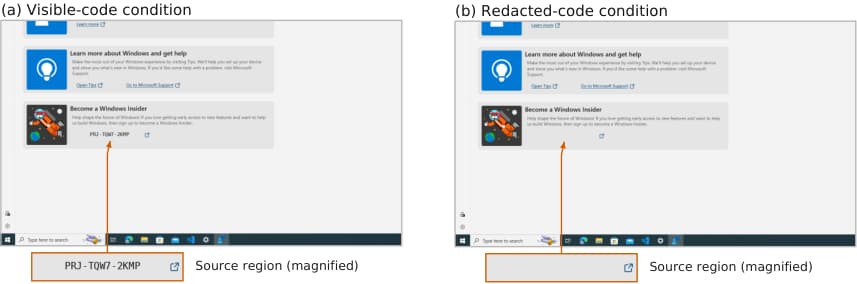
Canaries, or synthetic training records containing known secrets, are widely used to assess whether language models reveal information from their training data.Canaries, or synthetic training records containing known secrets, are widely used to assess whether language models reveal information from their training data. But how much do these measurements depend on the canaries themselves?

The visual canary changes only the source code region: visible during training on the left, redacted on the right.
Preprint: empirical study
arXiv

JetSpec++: Foresight Parallel Drafting with Self Refinements

Zhaoxiang Feng, Lanxiang Hu, Haoran Yuan et al.

Speculative decoding's effectiveness is governed by two quantities: the acceptance rate of drafted tokens and the cost of producing them.Speculative decoding's effectiveness is governed by two quantities: the acceptance rate of drafted tokens and the cost of producing them. We show the two objectives can be co-optimized with algorithm-system co-design, and present…

Preprint: method
arXiv

Why Do Agent Teams Fail Across Boundaries? A Failure Taxonomy for Agent-to-Agent Systems with Private States

Sarath Shekkizhar, Prathyusha Jwalapuram, Zixuan Ke et al.

Agents are increasingly interacting with other agents that act for different principals (people or organizations on whose behalf they work), such as a buyer's personal…Agents are increasingly interacting with other agents that act for different principals (people or organizations on whose behalf they work), such as a buyer's personal agent negotiating with an enterprise's seller agent.

Preprint: empirical study
arXiv

The Last Remote Sensing Model Built by Humans? Casting Any Earth Observation Task as Recursive Self-Improvement

Sijie Zhao, Zeqi Zhou, Heli Qi et al.

Earth observation (EO) models are still built by hand. For each new task, experts design a training recipe and tune it against a benchmark.Earth observation (EO) models are still built by hand. For each new task, experts design a training recipe and tune it against a benchmark. We show that this loop can be handed to an agent.

Preprint: method
arXiv

TwinPrune: Density-Aware Two-Phase Token Pruning for Vision-Language Models

Kai Liu, Anqi Li, Junxian Li et al.

We propose a unified spatial-density signal to score token importance for both inference phases: bipartite merge for prefill and KV eviction for decode, yielding…We propose a unified spatial-density signal to score token importance for both inference phases: bipartite merge for prefill and KV eviction for decode, yielding measurable gains in each stage.

Preprint: method

Thursday, October 151 paper

arXiv

MCMC Can See Can't See

Daniel Matsui Smola

It is folklore that passing "convergence" diagnostics does not guarantee that a Markov chain has converged.It is folklore that passing "convergence" diagnostics does not guarantee that a Markov chain has converged. We prove this as an impossibility for any finite checklist of diagnostics.

Preprint: theory

Wednesday, October 71 paper

arXiv

Vibe Building

Yongqing Jiang, Haoran Luo, Jianze Wang et al.

Automated building design must comply with seismic and wind codes and satisfy structural mechanics constraints, yet most existing agents produce visually plausible models…Automated building design must comply with seismic and wind codes and satisfy structural mechanics constraints, yet most existing agents produce visually plausible models without verification grounded in mechanical analysis and…

Preprint: new model

Monday, October 51 paper

arXiv

An Arrow of Time in Stable Autonomous Generation

Zhixin Lu

Does stable autonomous generation select a direction of time? This question matters both for learning models that autonomously generate prescribed dynamics and for…Does stable autonomous generation select a direction of time? This question matters both for learning models that autonomously generate prescribed dynamics and for designing controllers that make an invariant set attracting…

Preprint: theory